Who we are
The Highland Bolt Fund is a Scottish Volunteer community of interest based around Inverness and operating for the benefit of sport climbing from Fort William north in the Highlands of Scotland.
Vision
The vision of the Highland Bolt Fund is to enable inclusive, safe, and sustainable access to sport climbing for all climbers in the Northern Highlands by administering and managing a community fund, reporting tools, and equipping stores to ensure volunteers are provided with access to the appropriate bolts, anchors, and bolting gear, training, and knowledge to build and maintain sport climbing areas.
Access
Bolting activities supported by the Highland Bolt Fund will be in areas that are available for use by all climbers. The placement of bolts in the region administered by the Highland Bolt Fun will comply with accepted practice and ethics guides for the area, as determined by the local climbing community, and maintained by the Highland Bolt Fund.
Disclaimer
The HBF members do not accept responsibility for personal injury or death due to the failure of Bolts.
Guidance, training, and advice provided to Route Builders and Route Maintainers will be based on current practice.
It is the responsibility of each climber to make a judgment on the quality and age of each Bolt they clip and understand the BMC’s Participation Statement.
To request more information or request changes / corrections to any documentation or guidance, please contact admin@highlandboltfund.com.
Operating Members
We’re all volunteers and passionate about sport climbing in the highlands. If you see us around, please say hi!
The History and Future of Sport Climbing in the Scottish Highlands
Duncan McCallum
The beginnings of Scottish sport climbing
The history of sport climbing in Scotland is a mixed one, and over the years it has been hotly contested between the pro-bolters and their staunch opponents. Nowhere was this more evident than in the bolt debates held in Edinburgh and Glasgow in the late 1980s. It was out of these debates that the backbone of Mountaineering Scotland’s policies on bolting was established, in an effort to accommodate both camps and put an end to the bolt chopping that had blighted crags like Upper Cave Crag in Dunkeld for years.
The desire to find and develop sport climbing in Scotland was driven by a strong and active group of climbers from Edinburgh and Glasgow in the mid-1980s. We were spending weekends on the Yorkshire limestone, making long round trips in our cars and exploring whether sport climbing could find an acceptable place in Scotland.
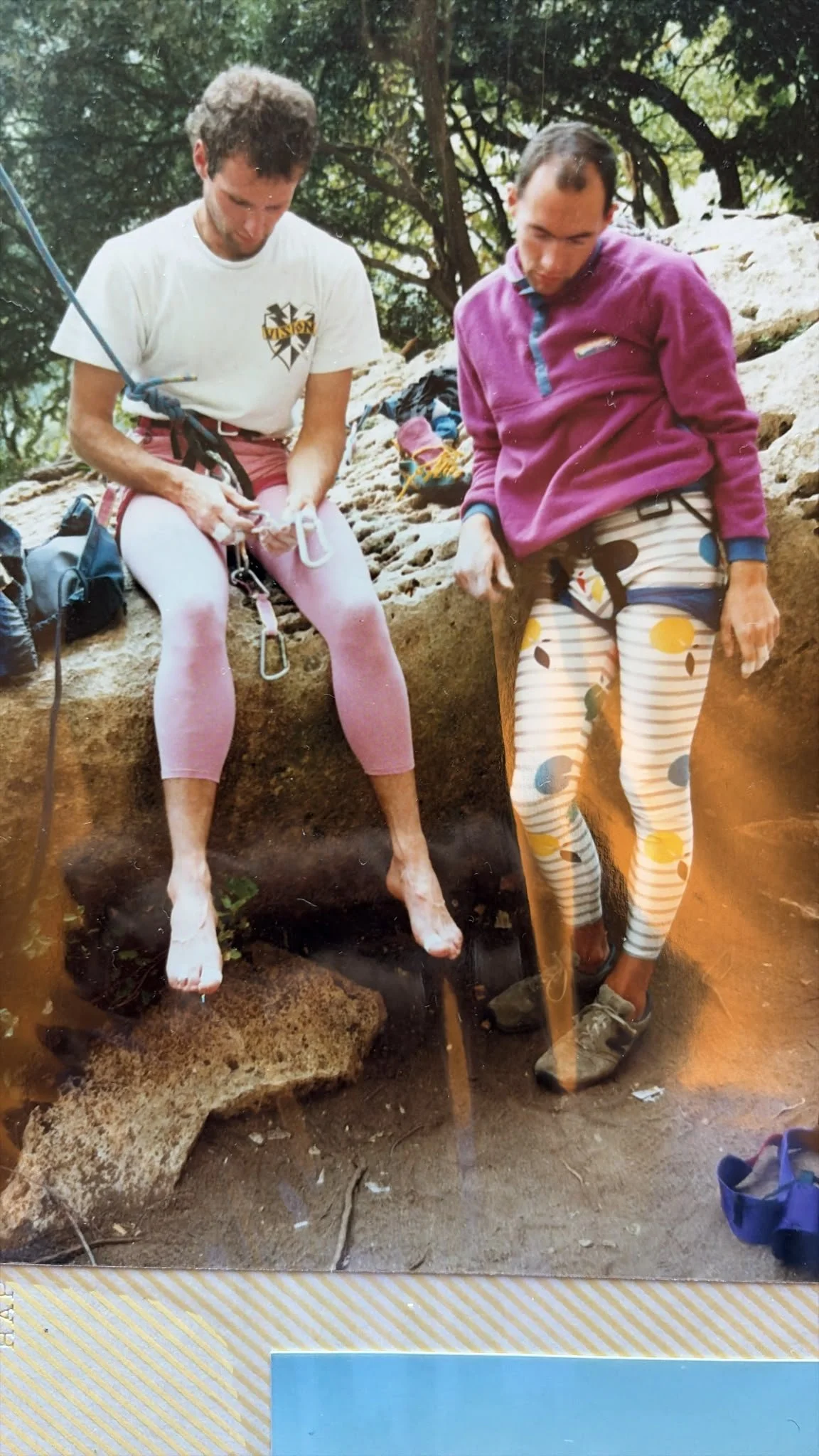
The Catwalk crew included myself, Mark Magowen, Dave “Cubby” Cuthbertson, John “Spider” Mackenzie, Mark Garthwaite, Rab Anderson, Graham “the Brat” Livingstone, Murray Hamilton and a host of other strong climbers.
What made this Lycra-clad group particularly interesting was that most, if not all, were heavily involved in pushing the trad and winter climbing standards of the day. We therefore had a pretty well-rounded understanding of the climbing landscape and the arguments on both sides.
So, in 1986, when I placed the first new bolt on Upper Cave Crag, closely followed by Graham Livingstone’s bolts on Tunnel Walls in Glencoe within weeks of each other, there was already an audience of skilled, motivated climbers keen to see sport climbing develop in Scotland.
The expansion north
From 1986 onwards, however, sport crag development, with the notable exceptions of Crag A’ Banchier and Tunnel Walls in Glencoe, remained largely restricted to the south of the country.
Ever the route hunter, Neil Shepherd broke through this northern barrier in 1998 when he boldly explored The Camel, just south-west of Dores on the southern shore of Loch Ness. This huge, intimidating conglomerate crag provided the north with some standout classics and opened the door just enough to give climbers the confidence to develop Moy and a series of conglomerate crags around Loch Fleet.
These developments, along with many others that followed, helped set the tone for sport crag development north of the Great Glen. Unlike much of the rest of the UK, developers here sought out crags offering a full spread of grades, from F4 right up to the hardest routes they could climb.
This almost unique aspect of Highland sport climbing created a resource that is now second to none in Scotland, and arguably in the UK.
We now have a huge number of crags and thousands of routes stretching from Aviemore to Rhiconich. For the time being, these mark the limits of the Highland Bolt Fund’s remit.
A legacy worth protecting
For the last quarter of a century, and a little more, these early developments have entertained and frustrated a huge and growing number of climbers, and the demand and audience seem to get larger every year.
But, just like the pebbles at Moy, things deteriorate. Bolts rust, lower-offs wear out and the knees of those early development enthusiasts begin to creak and fail. So, while the legacy is remarkable, it now needs to be maintained.
The Highland Bolt Fund makes no distinction between development and maintenance. Replacing deteriorating equipment, improving lower-offs, re-equipping established venues and supporting carefully considered new routes are all part of caring for the Highland sport-climbing resource.
It is hugely important to recognise that all of this development has been funded by a handful of crazily dedicated individuals, supported by friends and the occasional £20 note. The names Taylor, Wilby and Tattersall stand out as the most prolific amongst them.
If you enjoy climbing sport routes in the Highlands, you owe these people a massive debt of gratitude. They have dug deep into their own pockets to give us a sport-climbing Mecca that is almost unrivalled in the UK.
You might not be climbing the hardest Highland routes, and you may never venture into the most midge-affected western venues, but it is all part of the same picture. This is a shared resource, built up over decades through the dedication and generosity of a small number of climbers.
The Highland Bolt Fund: scope and principles
Like all local bolt funds, the Highland Bolt Fund operates within the limits of local climbing ethics and Mountaineering Scotland’s current policy on bolting and fixed protection.
Strictly speaking, its remit covers low-lying crags that cannot reasonably be classified as mountain crags, and whose routes can, to a greater extent, be regarded as sport climbs. The broader principles underpinning this distinction are outlined in Mountaineering Scotland’s bolting policy statement.
The fund does not support unrestricted bolting. It exists to support responsible work within agreed local and national principles, using consistent materials and keeping records of equipment supplied and placed.
The fund supplies bolts, anchors, resin and other equipment from its store; it does not provide money or grants. Supplying materials directly helps ensure that equipment is appropriate, consistent, and recorded.
The aim is to maintain and develop Highland sport climbing in a way that respects local ethics, recognises the history of the area and protects the resource for future generations.
How you can help
You can support the fund by donating and informing the HBF team of any issues you identify.
Every contribution helps provide the bolts, anchors, resin and other equipment needed to keep routes safe, improve lower-offs, re-equip established venues and support carefully considered new development.
We need your support to maintain and develop this amazing resource.
The legacy is already extraordinary. With your support, we can ensure it continues.